


Knight Survivor
4.0426.00 Reviews
App Specs
- Version
- 1.4.4
- Updated On
- License
- Free
- Downloads
- 500,000+
- Developer
- MOBIBRAIN TECHNOLOGY PTE. LTD.
- Categories
- Casual
- Platform
- Android
Screenshots
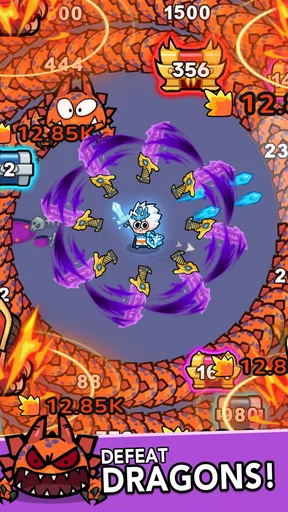
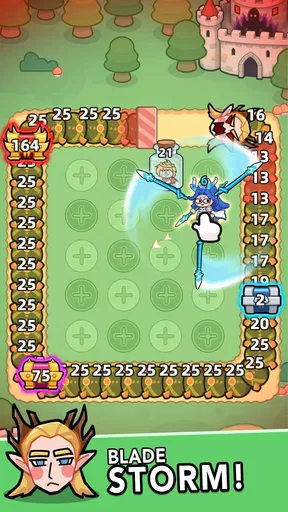
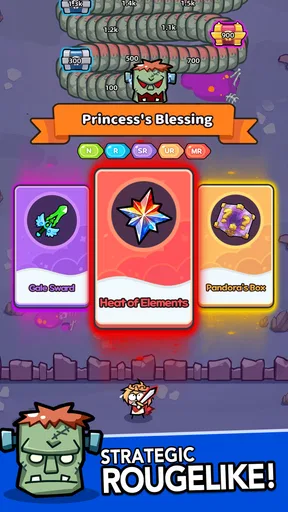
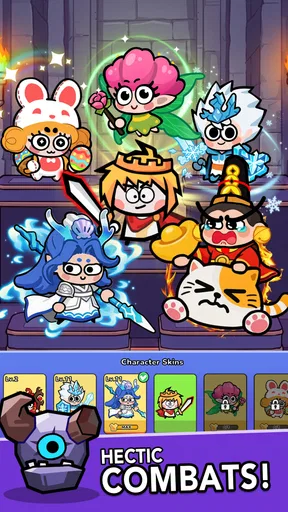
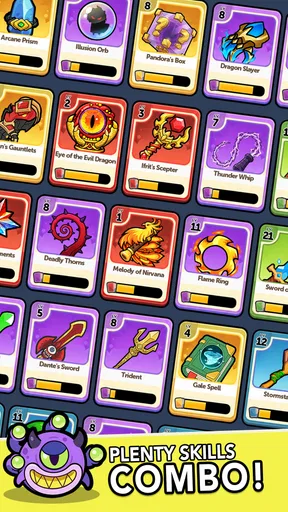
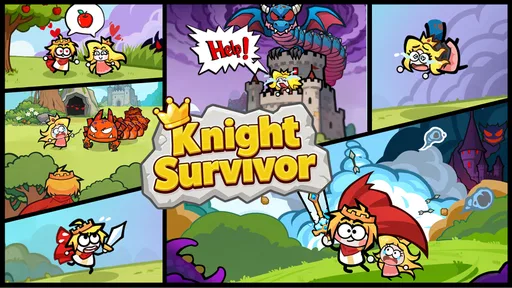
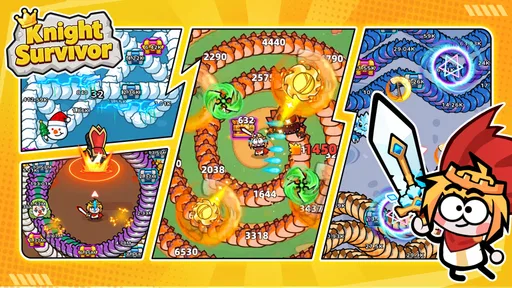
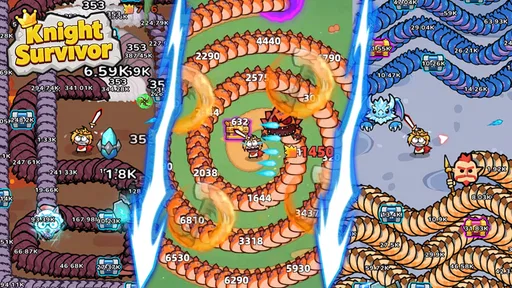
 Analysis by AppCompare
I approached Knight Survivor as a quick-play casual game rather than as a deep role-playing adventure. Its central appeal is easy to understand: you step into the role of a knight, answer a crisis, and try to survive the pressure created by a princess in danger and a dragon on the attack. That setup gives each session an immediate sense of purpose without asking me to learn a large world first.
That simplicity is important when deciding whether to install it. I would recommend it to someone who wants a fantasy-themed game that can be picked up in short bursts, especially during a commute, a waiting room, or a few quiet minutes at home. I would be more cautious about recommending it to a player looking for a long story, detailed character management, or the kind of carefully balanced challenge associated with a full-scale action RPG.
The game is free to download, and its age guidance is Everyone 10+. It comes from MOBIBRAIN TECHNOLOGY PTE. LTD., and the current release is version 1.4.4. Those details matter less than the actual rhythm of play, but they help set expectations: this is positioned as an accessible mobile game, not a premium console-style experience compressed onto a phone.
What matters before choosing this knight adventure
I look at this section as a quick expectation check: the knight-and-dragon premise gives the game an easy starting point, but the deciding factor is whether repeating survival attempts feels rewarding to you. I’d pay attention not just to how long a first session holds my interest, but to whether I still want to return after an ordinary, imperfect run.
The first decision is about session length
My main test for a casual game is whether it respects the way people actually use their phones. Knight Survivor works best when I treat it as a game for focused fragments of time. The fantasy premise gives me a reason to begin, while the survival framing creates a clear question for every attempt: can my knight keep going when the danger increases?
That structure is more useful than a complicated opening tutorial would be. I do not need to remember a large cast of characters before enjoying the first encounter. The princess-and-dragon setup also gives the action a little more personality than an abstract score-chasing game. Even when the session is brief, there is a recognizable rescue scenario behind it.
Still, players should decide how much repetition they can tolerate. Survival-oriented casual games often depend on repeating attempts, learning from failure, and gradually improving decisions. If you enjoy that loop, the simple premise becomes a strength. If you expect every minute to deliver new story content, the same loop may feel narrow.
Worth Reading Before You Choose

EA SPORTS FC Mobile 26 Is a Bigger Football Game, but It Takes Time

Flipboard Shows What News Apps Must Do Beyond the Feed

Switching to Android Auto Means Rethinking Your Driving Routine

Google Calendar Makes a Crowded Week Easier to Manage

Ludo King Makes the Most of the Minutes Between Plans

Baby Panda World Brings Quick Play to Modern Phones, but Its Game Library Feels Busy
Think about the kind of challenge you enjoy
I would place this game closer to accessible survival action than to a traditional turn-based fantasy game. The important question is not whether it offers a huge menu of systems, but whether you enjoy reacting under pressure and trying again with a better plan. That makes it suitable for players who like compact challenges and less suitable for anyone who wants a slow, thoughtful campaign with extensive dialogue.
A useful way to judge it is to ask whether failure feels informative. In a game built around survival, a failed run is worthwhile when it teaches me when to take a risk, when to protect progress, or when to avoid a dangerous situation. I would approach Knight Survivor with that mindset instead of expecting every attempt to be a complete adventure.
The casual category also affects the comparison. A puzzle game may be better when I want a quiet, low-pressure break. An endless runner may be better when I want instant reflex action with almost no fantasy framing. A larger action RPG may be better when I want exploration and a stronger sense of long-term character identity. Knight Survivor sits between those choices: more thematic than a bare arcade game, but lighter than a full adventure.
Device and purchase expectations
The game supports Android devices running version 7.0 or later, which makes it approachable for people who are not using a recent phone. I would still judge the experience on the specific device, because a compatible operating system does not automatically guarantee the same comfort on every screen or hardware configuration.
There are optional in-app purchases, with individual items ranging from $0.49 to $99.99. That wide range is the most important thing to keep in mind before starting. I would enter the game with a clear spending limit and avoid treating a difficult run as a reason to buy something immediately. Free access makes it easy to test the core appeal first, while the purchase range means families should use the relevant device controls if younger players may access the game.
The game has an average rating of 4.0 from around 9.3 thousand ratings, with 419 written reviews. I read that as a sign of a reasonably established but not universally loved casual release. It has also passed 500 thousand installs, so it is not an obscure experiment with no audience. Those figures do not replace personal testing, but they suggest that the basic concept connects with a substantial group of mobile players.
How I would test it before committing
I would not decide after only the opening minutes. My preferred test is to play during three different situations: one uninterrupted session, one short break, and one attempt after a failure. The first shows whether the game can hold attention, the second reveals whether it suits casual use, and the third shows whether its survival loop encourages me to try again or simply frustrates me.
I would also pay attention to how often I feel pushed toward spending. A free game can be perfectly enjoyable when purchases remain optional and understandable. The practical question is whether progress still feels satisfying without them. Because the listed purchase range reaches from small items to a much larger top amount, I would make that judgment personally rather than assuming that every player will have the same experience.
How the game performs as a decision
For a lasting place on my phone, the key question is whether the routine stays enjoyable without turning into an obligation. I’d judge each return on its own terms: does the survival challenge still give me a satisfying reason to play, or would another casual game better match the time and attention I have that day?
Where the fantasy framing helps
The strongest part of Knight Survivor is its immediate identity. “Knight,” “princess,” and “dragon” communicate the tone quickly, but the game does not need to bury that premise under a long explanation. I know why I am entering danger, and that is enough to make a short session feel more purposeful than a generic survival exercise.
I also like that the central conflict is easy to explain to another person. If a friend asks what I am playing, I can describe it in one sentence without listing a complicated class system or a large collection of modes. That clarity is valuable on mobile, where the best casual games often succeed by making the first decision obvious.
The hero role creates a modest emotional hook as well. I am not simply trying to keep a symbol alive for a high score; I am responding to a rescue situation. That does not turn the game into a story-heavy adventure, but it gives the action a reason to exist. For me, that extra layer helps the game stand out from casual titles that rely only on colorful presentation.
Why the survival format can be satisfying
Survival play gives me a clear improvement path even when the overall premise remains simple. I can look back at a run and identify a decision that caused trouble, then try to handle a similar moment differently. That creates a useful form of progress based on judgment rather than only on unlocking more content.
One practical tip is to avoid playing every attempt as if speed were the only goal. In a survival game, an aggressive choice may produce a quick advantage but also expose the knight to a larger problem later. I found it more useful to treat each attempt as a small experiment: test one approach, notice what breaks down, and change only one part of the plan on the next run. That makes improvement easier to recognize.
Another helpful habit is to reserve the game for moments when I can pay attention. Although it belongs to the casual category, survival pressure is not always ideal for distracted play. A short session while waiting for an appointment can work well, but trying to play while constantly switching between messages and other tasks may turn manageable danger into avoidable mistakes.
Where the experience may feel limited
The same clarity that makes the game accessible can also make it feel light. Players who want a rich fantasy world may find the princess-and-dragon premise more like a starting point than a fully developed narrative. I would not choose this title specifically for deep lore, extensive character relationships, or a campaign that regularly changes its storytelling style.
Repetition is another possible friction point. The survival format depends on returning to the challenge, and that is enjoyable only when the player likes refining an approach. If I am not in the mood to repeat a difficult situation, the game has fewer alternative reasons to keep me engaged. This is where a story-driven adventure or a puzzle game may be a better fit.
The purchase structure also deserves a realistic warning. A free entry point is convenient, but optional items can affect how I think about progress, especially after a frustrating attempt. My advice is simple: play long enough to decide whether the basic loop is enjoyable before spending anything. If the game is not fun without a purchase, buying more is unlikely to solve the underlying mismatch.
Who should choose a different category
I would steer competitive players toward a game designed around direct multiplayer competition if their main motivation is testing themselves against real opponents. Knight Survivor’s appeal is the personal survival attempt, not a promise of a ranked social contest. Likewise, players who prefer calm concentration may be happier with a word or logic puzzle that does not use danger as its main source of tension.
Fans of large role-playing games should also adjust expectations. A bigger RPG normally offers more exploration, equipment decisions, character development, and narrative context. Knight Survivor is the better choice when I want the feeling of a heroic emergency without committing to a lengthy campaign. It is the wrong choice when the campaign itself is the reason I am playing.
On the other hand, someone who finds endless runners too empty but finds RPGs too demanding may discover a comfortable middle ground here. The knight and dragon theme supplies context, while the survival structure keeps the session focused. That combination is the game’s clearest category advantage.
Everyday use: the five-minute rescue attempt
Imagine that I have five minutes before leaving for work. I do not want to begin a long quest, read several pages of dialogue, or remember where I left off in a complicated map. Knight Survivor makes sense in that moment because the objective is immediately understandable: enter the danger, keep the knight alive, and see how far the attempt goes.
If the run ends before I leave, I can put the phone away without feeling that I abandoned a major story chapter. If I have more time later, I can return with a specific adjustment in mind. That is a realistic use case, and it explains why the game’s casual positioning matters more than its fantasy vocabulary.
There is a trade-off, though. If I am already tired or distracted, the same short format may encourage careless retries. I get the most from it when I have enough attention to learn from what happened. For a completely effortless break, a slower puzzle or a simple idle experience may be less demanding.
Small habits that improve the experience
I recommend deciding on a personal stopping point before starting a run. Survival games can make one more attempt feel reasonable even when I am no longer enjoying myself. A limit based on time or concentration keeps the game in its proper role as a break instead of letting frustration take over.
I would also separate experimentation from progress chasing. Some attempts are best used to understand how the danger behaves, while others are better treated as serious pushes. Expecting every run to be a record makes ordinary learning feel like failure. Treating early attempts as information makes the loop more forgiving.
Finally, I would review purchases with the same discipline I use for any free mobile game. The low entry cost is a reason to try Knight Survivor, not a reason to spend automatically. Since items can range from $0.49 to $99.99, I would make sure the purchase settings on the device match the player’s age and household rules before handing over the phone.
The cost of switching to another game
Moving from Knight Survivor to a puzzle game is easy if I mainly want a quick break, but I would lose the heroic context and the tension of protecting a character through danger. Switching to an endless runner would preserve the short-session convenience while changing the focus toward reflexes and distance. Moving to a large RPG would add depth, but it would also demand more time and attention.
That makes the choice less about finding one universally superior game and more about identifying the kind of effort I want to spend. Knight Survivor asks me to repeat and refine survival attempts. A puzzle asks me to reason. An RPG asks me to invest in a broader journey. Knowing that difference prevents disappointment after installation.
The financial switching cost is low because the game is free to start, but the psychological cost can be higher if I have already become attached to a particular progression routine. I would therefore test the alternatives based on the problem I am trying to solve: boredom, lack of time, desire for story, or need for a challenge. The right replacement depends on that answer.
My recommendation for different players
I recommend Knight Survivor to casual players who enjoy fantasy themes, short survival attempts, and learning through repetition. It is especially appealing if I want a game that can be explained quickly and resumed without a large mental checklist. The 10+ age guidance makes it a reasonable family-aware option, although adults should still pay attention to the purchase settings.
I would recommend trying it cautiously rather than promising that it will become a long-term favorite. The free download removes the biggest barrier, and the current version gives players a straightforward way to see whether the core loop fits. I would judge it after several sessions, not after one unusually easy or unusually frustrating attempt.
I would skip it if my priority is a substantial narrative, deep customization, quiet puzzle solving, or direct competitive play. Those needs point toward other categories. Knight Survivor is most convincing when I want a compact heroic survival challenge, not when I want the game to serve as a complete fantasy world.
My final view is positive but measured. The game has a clear identity, an approachable premise, and a format that suits real mobile schedules. Its limitations are equally clear: repetition may wear thin, the story concept is lighter than a full RPG, and the broad in-app purchase range calls for self-control. Try it for the survival loop, not for promises of a massive adventure. If that loop makes you want to improve one attempt after another, this free casual game is worth keeping installed; if you need variety, story, or a calmer pace, another category will serve you better.
Pros
- Simple controls make the game easy to pick up on mobile.
- Short runs are convenient for quick gaming sessions.
- Many enemy types keep combat encounters varied.
- Character upgrades provide a clear sense of progression.
- Offline play makes it suitable for gaming without a connection.
Cons
- Repeated stages can make the experience feel predictable over time.
- Difficulty may increase sharply in later levels.
- Some upgrades require significant grinding to unlock.
- On-screen action can become visually crowded during large battles.
- Ads or in-app purchases may interrupt the free-to-play experience.
FAQs for Knight Survivor
What is Knight Survivor about?
Knight Survivor is an action-survival game in which you control a brave knight fighting through waves of enemies. The main objective is to stay alive, defeat increasingly difficult opponents, collect rewards, and improve your character between battles. Its gameplay combines simple controls with fast combat, making it accessible for casual players while still offering a challenge as enemy groups become stronger.
Is Knight Survivor free to download and play?
Knight Survivor can generally be downloaded and played for free, although the exact availability and monetization options may depend on your Android or iOS region. Like many mobile action games, it may include optional advertisements or in-app purchases for upgrades, resources, or other conveniences. You should review the store listing before downloading if you want to confirm current pricing, purchases, and supported devices.
Does Knight Survivor require an internet connection?
Whether Knight Survivor works fully offline can depend on the version installed and the feature you are using. Basic gameplay may be available without a constant connection, but advertisements, cloud-related functions, updates, rewards, or purchases can require internet access. If you plan to play while traveling, it is best to test the game offline after installation rather than assuming every mode will remain available.
Is Knight Survivor suitable for beginners?
Knight Survivor is relatively easy to start because its core controls and combat objectives are straightforward. Beginners can quickly understand how to move, attack, collect improvements, and survive enemy waves. However, later stages may require better positioning, faster reactions, and more thoughtful upgrade choices. Players who prefer relaxed games should expect some difficulty, especially when enemies become more numerous or powerful.
Are there in-app purchases or advertisements in Knight Survivor?
Knight Survivor may use advertisements and optional in-app purchases as part of its free-to-play structure. Ads can sometimes provide bonuses or appear between sections of gameplay, while purchases may help unlock resources, upgrades, or other advantages more quickly. The exact offers can change with updates and by region, so check the official Google Play or App Store page before downloading.


